
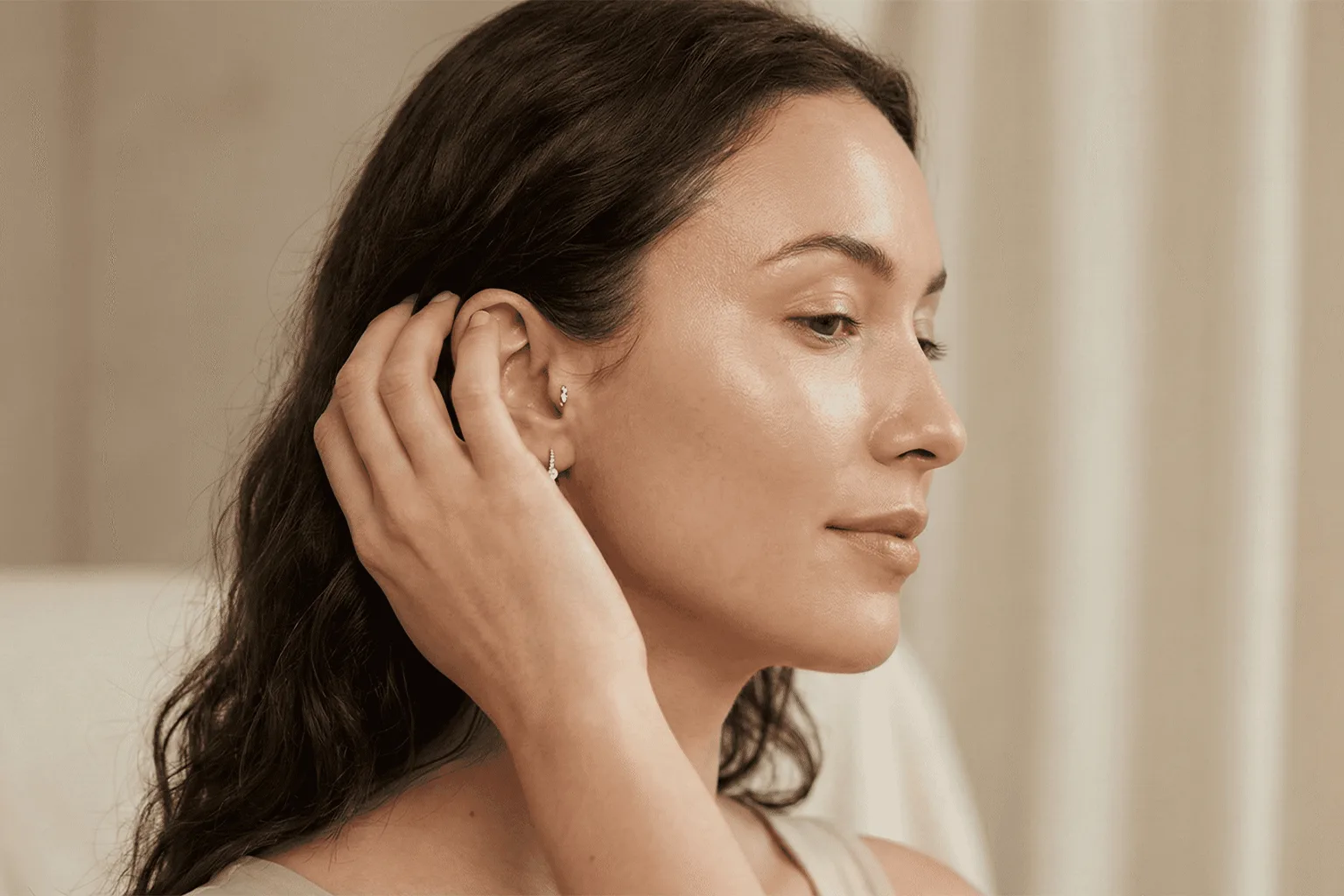
Autologous fibroblast therapy is the expansion, in a licensed laboratory, of the fibroblasts — the skin cells that produce collagen and elastin — taken from a small skin sample behind the ear, and their return to the skin. It is not a filler: its aim is not to add volume, and it does not change the shape of the face. The aim is to support the skin’s own reserve of structure-producing cells. It is a process that takes weeks; I do not recommend it to someone expecting a result from a single session.
I am a specialist in anaesthesiology and reanimation; sterile technique, local anaesthesia and injection safety are core areas of my training. I perform cellular treatments within this framework, carrying out every step of preparation and application myself. The general framework of cellular treatments is on the cellular therapies page.
Note: This page does not describe the “fibroblast” procedure offered in beauty salons. That procedure uses a plasma pen, a device that vaporises the skin surface with heat, and has nothing to do with the cell treatment described here.
How is it thought to work?
Fibroblasts are the cells responsible for producing collagen, elastin and hyaluronic acid in the skin. With age their number falls and their production capacity declines; the skin loses elasticity. In this treatment, fibroblasts from the skin behind the ear — an area protected from the sun and relatively less weathered — are expanded in the laboratory and returned to the skin, with the aim that the delivered cells remain in the tissue and contribute to your own collagen production.
Autologous fibroblast therapy is one of the few cellular treatments with placebo-controlled studies. In a multicentre, double-blind, placebo-controlled randomised trial with cultured autologous fibroblasts, improvement in nasolabial wrinkle scores was reported 1. In a 60-person pilot study comparing it with hyaluronic acid filler, improvement in the nasolabial fold was reported in the fibroblast group for up to 12 months 2.
Process and session plan
- Assessment and preparation. Before the biopsy I assess your general health; when I consider it necessary, I review blood values and correct any deficiencies found with oral supplementation and, in selected cases, through intravenous therapy.
- Biopsy (about 15 minutes). Under local anaesthesia, a small skin sample is taken from behind the ear; blood is also drawn for use in expanding the cells. Stitches are usually not needed.
- Laboratory phase (4–6 weeks). The tissue is sent to the laboratory in the cold chain; the fibroblasts are isolated and expanded.
- Application (2–3 sessions, 3–4 weeks apart). The prepared cells are delivered into the skin with fine needles; each session takes about 30 minutes.
The effect is not immediate. Radiance is reported within weeks, and the main change in skin quality within months. The delivered cells remain in the tissue; how long the effect lasts varies with the person, age and lifestyle — I give no figures in years without a source.
When do I consider it?
- Wrinkles and loss of elasticity: cheeks, jawline, perioral area.
- Fine lines: for people who want to improve skin quality without changing their expression.
- Atrophic (pitted) acne scars: a randomised trial with cultured autologous fibroblasts reported improvement in the appearance of pitted scars that disappear when the skin is stretched (distensible scars) 3; I do not promise that it is sufficient on its own for deep scars, and I usually discuss combinations.
- Neck, décolletage and the back of the hands: together with the face; region-specific assessment is on the neck and décolletage rejuvenation and hand rejuvenation pages.
I do not recommend this method to someone whose goal is volume or shape; there, fillers are discussed.
How it differs from Alloblast and other cell methods
With fibroblast treatment, the decision depends on the source and the timeline: working with your own cells requires a biopsy and weeks of culture; when a ready product and a single session are preferred, allogeneic fibroblasts come to the fore. The final choice is made at consultation.
The allogeneic option is described on the Alloblast page.
With autologous cell treatments, the decision depends on time: when weeks of laboratory culture are acceptable, cultured fibroblasts come to the fore; when same-day completion is preferred, micrografts or SVF do. The final choice is made at consultation.
The same-day options are on the autologous micrograft and SVF pages. For options that do not involve cell transplantation, see exosomes and PRP.
Being honest about the level of evidence
Cultured autologous fibroblast therapy has placebo-controlled randomised trials 13; those trials were conducted with a specific product. References 1 and 3 are affiliated with the manufacturer of the product studied; three authors of reference 2 are named inventors on a patent application for the culture method used. Long-follow-up data are limited on how long the effect lasts, in which areas and to what extent it helps, and whether repetition is needed. Alongside studies reporting improvement there are studies reporting limited benefit or lacking a control group. There is no evidence for statements such as “turns back the skin’s biological age by years”, so I do not make them. The goal is improvement in skin quality.
The procedure and pain management
Topical anaesthetic cream is standard. Because I am an anaesthesiologist, I treat pain management as a separate part of the procedure.
Tissue harvesting is done under local anaesthesia; what you feel is a brief sting while the anaesthetic is given. Mild tenderness at the site may last a few days. In the application sessions, cooling is added when needed; what you feel is a brief sting and mild burning.
Aftercare
First 24 hours
- No make-up on the treated area
- No hot showers, sauna, hammam or steam
- Avoid heavy exercise
- No alcohol
- Do not sleep face-down (facial treatments)
- Do not touch the injection points; do not squeeze or massage the bumps
First 48 hours
- Avoid direct and prolonged sun exposure
- No facial massage, skincare treatments or energy-based device treatments
Expected findings Small bumps (papules) at the injection points lasting 12–24 hours are expected and show that the product has settled in the skin. Mild swelling, tenderness or bruising lasting a few days may occur. Around the eyes, bruising is slightly more likely than on the rest of the face.
Additional advice
- The harvest site behind the ear is covered with a small dressing and usually needs no stitches; keep it dry for the first 24 hours; it heals on its own within 3–4 days
- No deep-tissue laser or aggressive peeling to the area for the first 3 months
- If redness increases, or warmth or fever develops, contact the clinic
Safety and anatomy
Because allergic reactions can occur rarely, treatments are carried out under medical supervision.
The cells are obtained from your own tissue, and serum prepared from your own blood is used to expand them. The biopsy site is covered with a small dressing; the risk of infection is low but not zero. Temporary redness, small bumps and bruising may occur at the injection points; the expected durations are given in the aftercare section.
Manufacturing and regulatory status: Cell culture is performed in accredited laboratories that hold a cGMP production permit approved by the Turkish Medicines and Medical Devices Agency (TİTCK) of the Ministry of Health. The laboratories’ operating status can be checked on TİTCK’s manufacturer and distributor search page. Approval belongs to a product and to a specific indication, not to a technique or to a physician.
Who is not suitable
Treatment is not performed, or is postponed, in the following situations:
- Active infection or inflammation in the treatment area
- Autoimmune disease in an active phase
- Pregnancy and breastfeeding
- Known hypersensitivity to the product components
- Uncontrolled chronic illness
- Untreated bleeding disorder or unregulated anticoagulant use
I do not perform these treatments during active cancer treatment. For a person with a history of cancer, I make the decision together with the treating specialist.
Treatment is also not performed with a known hypersensitivity to the local anaesthetics used for harvesting; with a marked tendency to keloid formation at the harvest site, the decision is made at consultation.
For a person on immunosuppressive treatment, the decision is made at consultation.
Treatment is postponed during an active cold sore (herpes) outbreak in the area, during an active acne flare, and if aggressive peeling or laser was performed on the same area within the past two weeks.
Without being a medical contraindication, I also consider expectation and treatment to be mismatched in these situations:
- People expecting a result from a single session or within a short time
- People whose actual need is a change in volume or shape — filler is assessed
- People whose schedule cannot accommodate the laboratory phase
Suitability is determined by consultation in every case.
Pricing
Under the applicable regulations, price information cannot be published on our website. The cost of a treatment depends on the product used, the technique chosen and the extent of the treatment. You can call the clinic for detailed information.
Frequently asked questions
Is autologous fibroblast therapy the same as the fibroblast procedure in beauty salons?
No. That procedure uses a plasma pen, a device that vaporises the skin surface with heat. The treatment on this page is the expansion of your own cells in a laboratory and their delivery into the skin; the methods and the aims are different.
I am older. Will my fibroblast cells still work?
The biopsy is taken from behind the ear, an area protected from the sun and relatively less weathered. Healthy cells are selected and expanded during the laboratory phase. I assess suitability at consultation.
Is there a cancer risk with autologous fibroblast therapy?
Fibroblasts are mature (somatic) cells; the laboratory only increases their number and does not alter their genetic makeup. I do not perform this treatment during active cancer treatment; with a history of cancer, I make the decision together with the treating specialist.
Will autologous fibroblast therapy make my face puffy?
No. This is not a filler; its aim is not to add volume, and it does not change the shape of the face. The goal is skin quality.
Planning your visit
My clinic is in Nişantaşı, Şişli, on the European side of Istanbul, approximately 45 minutes from Istanbul Airport.
For autologous fibroblast therapy I suggest planning a stay of two to three days: arrival, consultation and treatment, and departure. This treatment requires a biopsy visit and, after the laboratory phase, separate application visits. The biopsy takes place in Istanbul, and we plan the schedule of the application visits together according to your travel arrangements, with remote follow-up in between. Flying is generally appropriate 24 hours after an injectable treatment.
Consultations are conducted in English. Follow-up after you return home is arranged remotely, and I remain reachable for any questions during the period in which the result develops.
Dr. Ömer Fatih Şahin — Specialist in Anaesthesiology and Reanimation Diploma Registration No: 113606
Published: 22 February 2026 · Last updated: 2026-09-22 This content has been medically reviewed by Dr. Ömer Fatih Şahin.
References
- Smith SR, Munavalli G, Weiss R, Maslowski JM, Hennegan KP, Novak JM. A multicenter, double-blind, placebo-controlled trial of autologous fibroblast therapy for the treatment of nasolabial fold wrinkles. Dermatol Surg. 2012;38(7 Pt 2):1234–1243. https://pubmed.ncbi.nlm.nih.gov/22409385/ — Two authors are paid investigators for the manufacturer and one is a member of its medical advisory board; the study is affiliated with the manufacturer.
- Wanitphakdeedecha R, Ng JNC, Phumariyapong P, et al. A pilot study comparing the efficacy of autologous cultured fibroblast injections with hyaluronic acid fillers for treating nasolabial folds. Sci Rep. 2023;13:6616. https://pubmed.ncbi.nlm.nih.gov/37095274/ — Three authors are named inventors on a patent application for the fibroblast culture method used.
- Munavalli GS, Smith S, Maslowski JM, Weiss RA. Successful treatment of depressed, distensible acne scars using autologous fibroblasts: a multi-site, prospective, double blind, placebo-controlled clinical trial. Dermatol Surg. 2013;39(8):1226–1236. https://pubmed.ncbi.nlm.nih.gov/23566237/ — Funded by the manufacturer; three authors are consultants to the manufacturer and one is an employee.